

PCSO vs endometriosis is a condition that affects women of reproductive age. Both can cause painful conditions and times of excessive bleeding. It can also disrupt your menstrual period through irregular periods. In addition, the causes and some of the main symptoms of both conditions differ from each other. According to research, one in 10 women has endometriosis in United States. PCOS is found in more than 5 million people of reproductive age in the United States.
Endometriosis is a condition in which tissues lining the ovaries, intestine, and pelvis, and tissue resembling the lining of the uterus grows outside the uterine cavity. PCOS, on the other hand, affects hormone levels in women. People who have PCOS have high levels of male hormones, also known as androgens. This situation interferes with the spawning process. It also causes excessive hair growth and acne.
Insulin resistance is more common in women with PCOS, in which the body does not respond appropriately to insulin. Even high insulin and blood sugar levels can result in weight gain in women. Both conditions have some similar symptoms. It is present in unique and different symptoms that help you distinguish between the two. You can read the rest of the article to learn the differences between endometriosis vs PCOS symptoms and conditions.
Symptoms of endometriosis vs. PCOS
People who have PCOS vs endometriosis have some symptoms such as quite a heavy bleeding and difficulty getting pregnant. However, it is possible to say that each situation has its unique symptoms. People who have both conditions don’t show symptoms. Some of the symptoms prepared by the National Institute of Child Health and Human Development are listed below.
Endometriosis:
- Painful periods
- Heavy bleeding
- Low back pain during menstruation
- Painful bowel movements
- Difficulty getting pregnant
- Painful urination
- Pain during sex
- Pelvic pain
- Digestive problem
- Intestinal pain
PCOS:
- Missed periods
- Painful bleeding
- Irregular periods
- Cyst formation in the ovaries
- Difficulty getting pregnant
- Hirsutism
- Acne
- Oily skin
- Sparse hair
- Darker and thicker skin patches
What are the causes of endometriosis vs. PCOS?
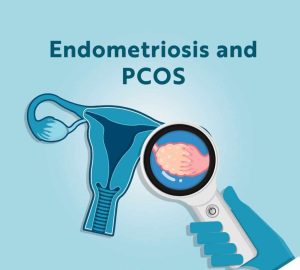
The doctor can not fully explain the exact causes of PCOS vs endometriosis. However, studies on these issues have helped to reach some possible causes.
Endometriosis causes
Some theories for people who have endometriosis include:
- Retrograde menstruation: In this theory, some of the tissue that the body has shed during the menstrual cycle flows from the fallopian tube to other parts of the body, such as the pelvis.
- The lymphatic or vascular system spread: Another theory. This suggests that endometrial tissue can spread to distant organs and that blood will also be implanted through lymphatic ducts.
- Celiomic metaplasia: This theory talks about the cells in the body outside the uterus undergoing changes and turning into an endometrium-like tissue and starting to grow.
- Stem cells: This theory also suggests that some stem cells may be responsible for the regeneration of endometrial tissue at the time of the menstrual cycle and that these stem cells may spread to other parts of the body, causing endometriosis.
- Surgery: Another theory. Accordingly, it is also thought that endometrial tissue may be accidentally displaced during some surgical operations such as cesarean section and hysterectomy.
PCOS causes
One reason why the PCOS condition occurs may also be due to genetic causes. PCOS is a condition that can run in families. It is therefore possible that it is caused by a mutation in one or more inherited genes. Doctors have also noted that the incidence increases more in women whose sisters and mothers have PCOS.
Risk factors
There are some risk factors for PCOS vs endometriosis. People with PCOS vs endometriosis may also be at risk of developing other conditions.
Endometriosis risk factors
Risk factors for people who have endometriosis include:
- Infertility
- The menstrual period starts before the age of 11
- Menstrual period lasting more than 7 days
- A menstrual cycle lasting less than 27 days
- Someone with endometriosis in the family
Since 2017, it is thought that there is a potential relationship with endometriosis in people who also have poor body measurements.
PCOS risk factors
According to the Centers for Disease Control and Prevention, risk factors for PCOS include those who have a family history of PCOS. People with PCOS also have a high risk of diabetes. More than half of women with PCOS develop type 2 diabetes by age 40. Other conditions in which people with PCOS are at risk include:
- Heart disease
- High blood pressure
- High LDL cholesterol and low HDL cholesterol
- Sleep apnea
- paralysis
Endometriosis diagnosis
Doctors can accurately confirm the diagnosis of endometriosis using laparoscopy surgery. With this surgery, the doctor is allowed to check the internal organs for endometriosis tissue. For this, a small imaging device is placed in the abdomen. The surgery proceeds in this way. At the same time, a possible diagnosis can be made based on the patient’s history with physical examination and imaging tests. Nor does a person need a definitive diagnosis to begin treatment for endometriosis.
During the diagnostic process, the healthcare professional discusses the patient’s medical history to evaluate symptoms and rule out other conditions. At the same time, doctors may use some tests. These:
- Pelvic exam: A doctor uses this test to feel cysts or sores in the back of the uterus.
- Imaging test: The doctor uses ultrasound and MRI scanning to check for larger areas of endometriosis, such as cysts and nodules.
- Medication: If the doctor does not notice any risks, he may prescribe hormonal birth control. If the pain of people is reduced while taking this medicine, they may have endometriosis.
PCOS diagnosis
If other conditions have been ruled out by doctors and a person is showing some of the symptoms listed below, they have a diagnosis of PCOS. These:
- Irregular or infrequent menstruation
- High androgen levels
- Multiple cysts in one or both ovaries
The healthcare professional can find a PCOS diagnosis with any of the following tests:
- Physical examination: During a physical examination, the doctor determines the person’s blood pressure, body mass index, and waist size. It also looks at whether there is extra hair on the person’s skin, face, chest, and back.
- Pelvic exam: The doctor may perform a pelvic exam to detect signs of high levels of the male hormone, including an enlarged clitoris. It can also check if a person’s ovaries have also grown.
- Pelvic ultrasound: With this test, you can examine whether there are cysts in the ovaries. It also controls sound waves to control the inner surface of the uterus.
- Blood test: The doctor also uses this test to determine if the person has high androgen levels. It also controls hormones associated with an active thyroid to rule out these conditions as well.
Can you have endometriosis and PCOS together?
Although it is rarely seen in women, PCOS vs endometriosis syndrome may be combined. Many of the studies in both cases also show that endometriosis occurs in 7-8% of women who have PCOS and is mild overall. People who have a diagnosis of PCOS should consult their doctor if they notice bodily changes or symptoms associated with endometriosis.
Endometriosis treatment
Some treatment options for endometriosis symptoms include:
- Painkillers
- Hormone therapy, including hormonal birth control
- Surgical practice, including laparoscopy and hysterectomy
- Quitting smoking
- Eating more nutritious diet meals
- Exercising to help with pain management
Healthcare professionals recommend laparoscopy surgery for people with endometriosis, depending on how severe the condition is to improve fertility. If the person still has difficulty getting pregnant after surgery, the doctor may recommend IVF.
PCOS treatment
Treatment options for PCOS are also often done for symptom management. These include:
- Acne and hair loss medication
- Lifestyle changes, such as exercise and weight loss
- Hormonal birth control
- Anti-androgen drug
- Epilation
- Insulin-sensitizing drugs, such as metformin
- Weight management
- Painkillers
Fertility problems for people with PCOS are generally caused by the lack of ovulation. According to the American College of Obstetricians and Gynecologists, lifestyle changes, such as weight loss, can trigger more regular menstrual periods in people with PCOS. A healthcare professional may also recommend that someone with PCOS lose weight before trying medication for infertility.
Medications such as letrozole, clomiphene, and metformin may also be prescribed to help the person with PCOS who is experiencing infertility.


